
Article translated from: https://www.hangaritaly.it/european-seaplane-association-a-aero-2025/ by Marco Limbiati.
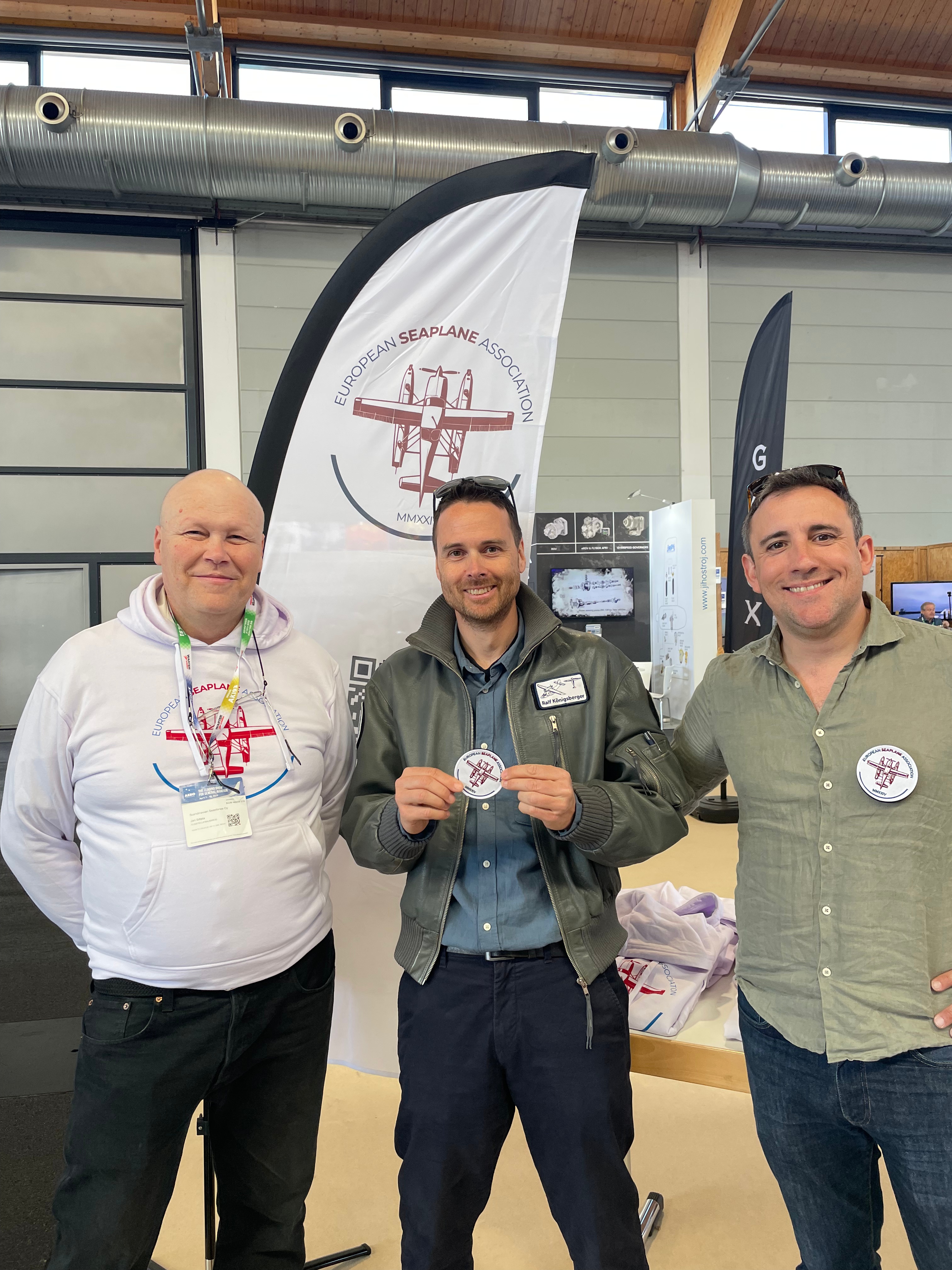
One of the most exciting highlights of this year’s edition is undoubtedly the official debut of the European Seaplane Association (ESA).
We spoke directly with Bernardo Tomea, General Manager of the newly established association founded in October 2024, who shared the vision, goals, and ambitions of a project aimed at reviving seaplane aviation in Europe.
A Key Presence: Friedrichshafen as a Launchpad
“It’s essential for us to be here,” explains Tomea. “AERO is the reference fair for general aviation in Europe and represents a perfect opportunity to assert our presence—not only as an association, but also to bring seaplanes back into the collective imagination.”
The return of seaplanes is not just a nostalgic endeavor, but a cultural, touristic, and—as we’ll see—strategic mission.
Seaplanes: Romantic, Sustainable, and Captivating
“Seaplanes are among the most beautiful and romantic means of transport,” Tomea says passionately. “Just think of the pioneering feats of aviation: many great flights began or ended on water. It’s a way of flying that evokes unique emotions.”
In addition to the charm of the aircraft itself, ESA also emphasizes its sustainability: seaplanes can operate in harmony with the environment without the need for major infrastructure, landing on lakes, rivers, and seas. It’s a low-impact alternative, particularly for sensitive and protected destinations.

A Niche Looking to Become a Network
Seaplane flying in Europe remains a niche: few schools, few active routes, and few pilots. And that’s exactly why ESA wants to build a network: “The goal is to create critical mass,” says Tomea. “A network that can pass on knowledge, experience, and passion. We need to join forces to grow the sector.”
Economic Sustainability and Strategic Partners
Tomea is clear: seaplane aviation can’t rely on passion alone. It must become economically viable. This means involving interested partners not only from aviation, but also from tourism, hospitality, and food services.
“We already have some hotel partners, for example on the shores of Lake Maggiore,” he shares. “These are venues that believe in experiential tourism: offering guests the chance to arrive directly at the hotel dock by seaplane is an incredible added value.”

The Montadria Effect: A Wave of Enthusiasm
A concrete example of seaplane aviation’s potential is the Montadria initiative, a seaplane regatta that made stops in various Montenegrin towns. Promoted by Dragisa Raicevic, it was a resounding success.
“Each stop was packed with spectators,” Tomea explains. “The beaches were crowded. The interest was so high that it sparked parliamentary questions, and requests from municipalities and regions. Everyone wanted to know how to make these events permanent. It’s proof that the desire to fly on water exists—it just needs to be channeled.”
Looking to the Future

The European Seaplane Association is just getting started, but its foundations are solid: passion, vision, and pragmatism. Its debut in Friedrichshafen marks the beginning of a journey to bring seaplanes back to the forefront of modern, accessible, sustainable, and captivating aviation.
As Tomea concludes, “We’ve asked the right questions to build something that can last. Now it’s up to us—pilots, operators, and communities—to carry this dream forward.”
